


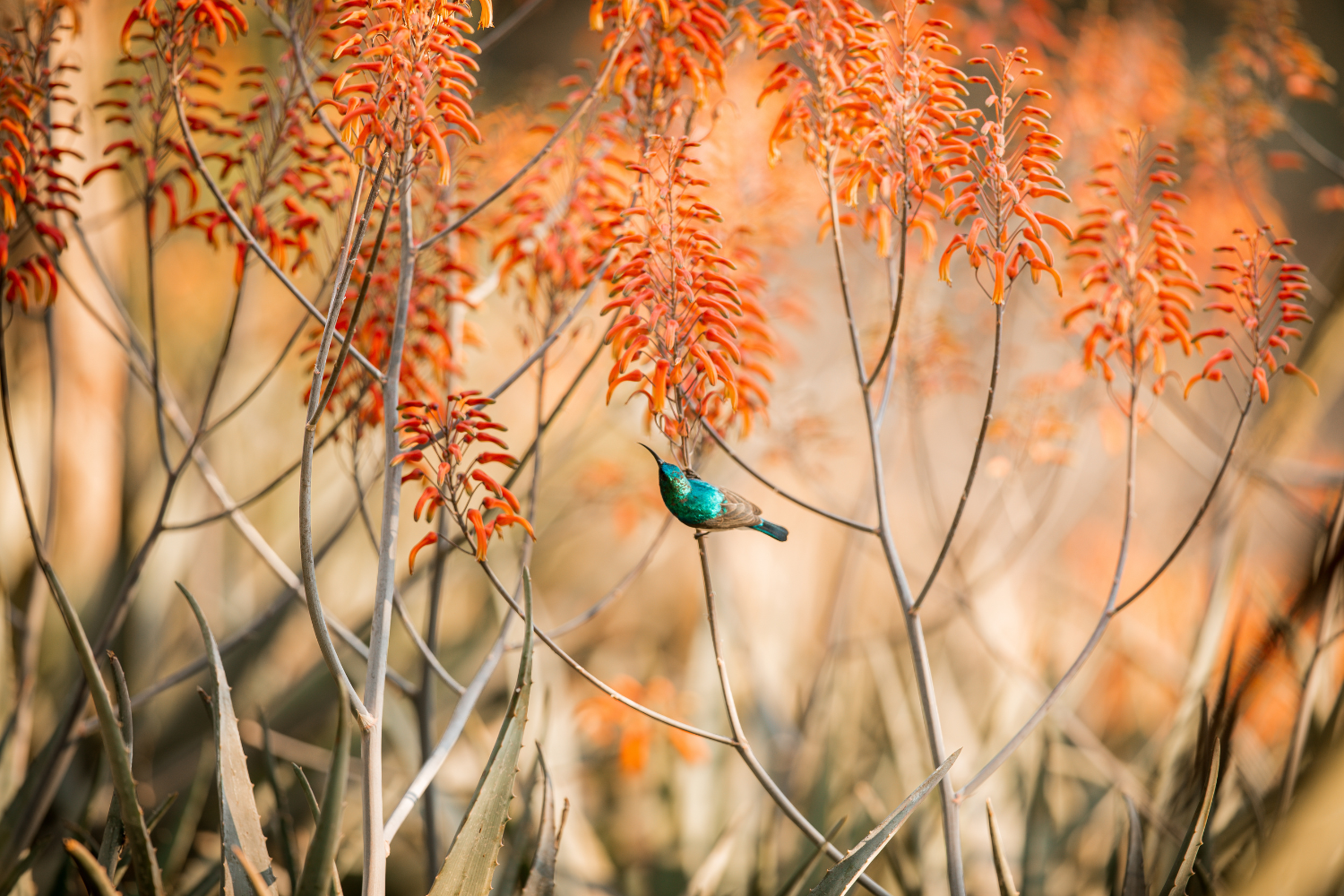
 18 August 2026
Beyond the Wild: Finding Nature Everywhere
Nature’s Way
I’m sitting behind my desk; it’s August in the Netherlands. And I’m trying to write about Nature.
How difficult can it be to connect with Nature from inside a building? With only a glimpse of treetops to look out over.
I close my eyes and connect with the African bush: what I’ve seen, smelled, and experienced there. Through digging in my memories, perhaps the feeling gets back to me. The feeling I have when I’m at Sashwa, the feeling that Nature unconsciously gives us.
What is Nature?
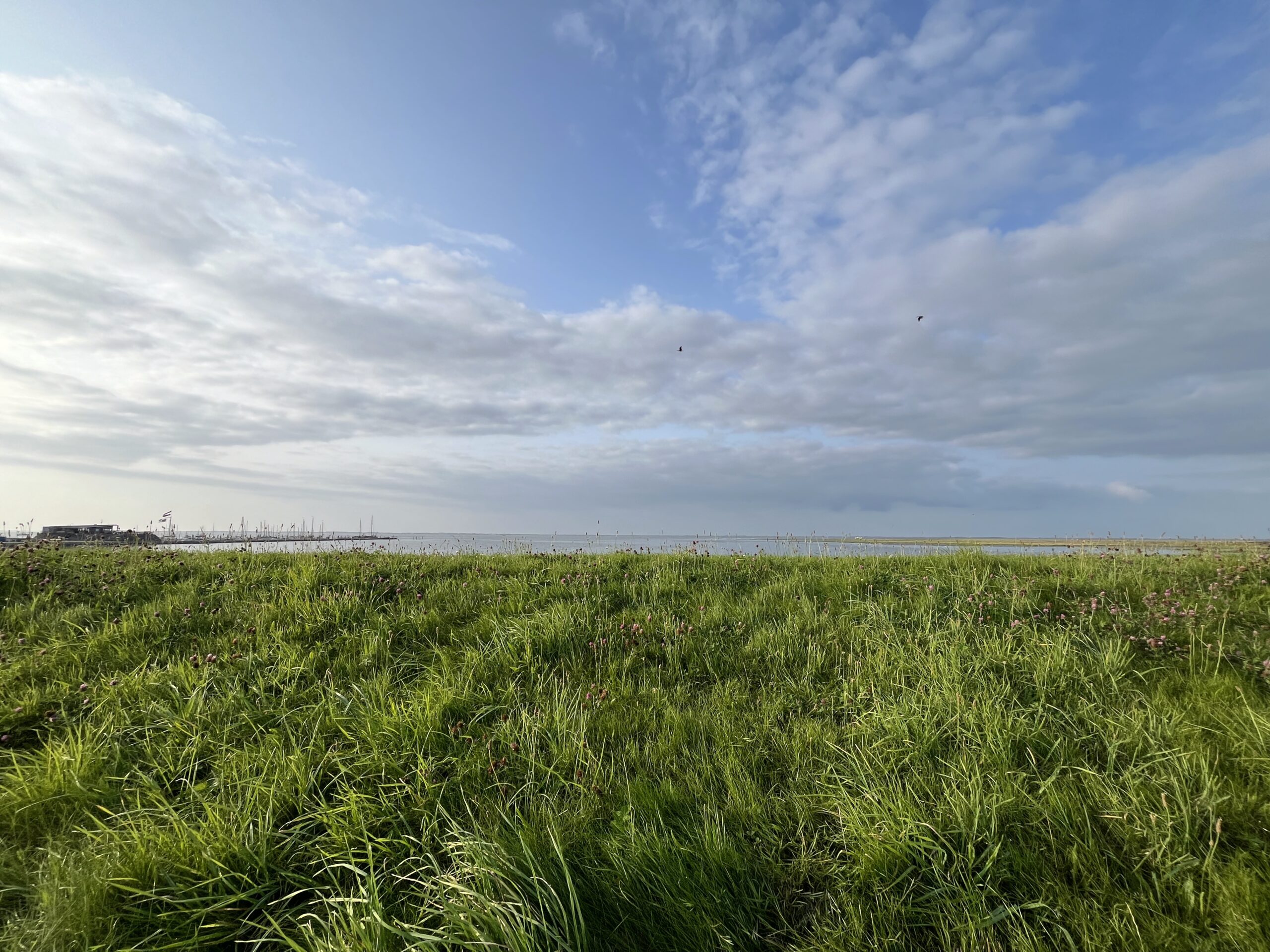
Coming from the Netherlands, it’s not uncommon for people to say: “The Netherlands doesn’t have real Nature”, “we don’t have mountains”, “we don’t have the wild”.
If you take the perspective that Nature is rough, mountainous, and wild, the Netherlands indeed falls short of that definition. However, this narrative could be problematic, as worldwide access to the rough and wild is shrinking and mountains are filling up with people and construction.
On the contrary, if you’re able to see the vividly coloured butterfly in your garden as Nature, or the forest smell after rain, nature is suddenly more accessible. If you’re able to notice the changing colours of leaves from spring to autumn, you’re observing a wild process. You will observe Nature.
Process Time
Whether you take a break in a nearby park or arrive at Sashwa – River of Stars, I’ve learned that Nature has a process time. With process time, I mean the time it takes to detach from where we came from and from our thoughts, to being able to be in the moment. Visiting Nature close by, this can take up to 15 minutes.
It’s like you go through different phases. For example, I leave my house and start walking through the neighbourhood. As I walk away, my mind is filled with doubts, things I still want to do, and I don’t realise that there is another ‘state’. I look up: I observe the movement of the clouds and how the light shines through the canopy. At this stage, I realise that I enjoy looking up, and I feel wonder. My mind is still full, so the feeling of awe is quickly disrupted. The journey continues. Neither fast nor slow, I continue to walk. Looking right, left, hearing birds move, and hazelnuts break under my feet.
Slowly, my attention stays longer with the world around me. My breathing slows down, though; I don’t consciously notice it in the moment. After approximately fifteen minutes, something has shifted. Like a small surrendering. Now, I feel appreciation. I walk around the corner and arrive home.
At Sashwa, I’ve witnessed this same process taking place, lasting three days. It takes three days for someone to surrender to the African bush, to not feel bored when moments are quiet. To wake up with dawn but not feel tired, and for their eyes to reflect a deeper sense of soul and calm.
By this time, Sashwa’s wellness activities change from ‘activities’ to integral parts. Meditation is not an active form anymore but feels like a normal state. Hours can be spent looking over grazing impalas or resting lions.
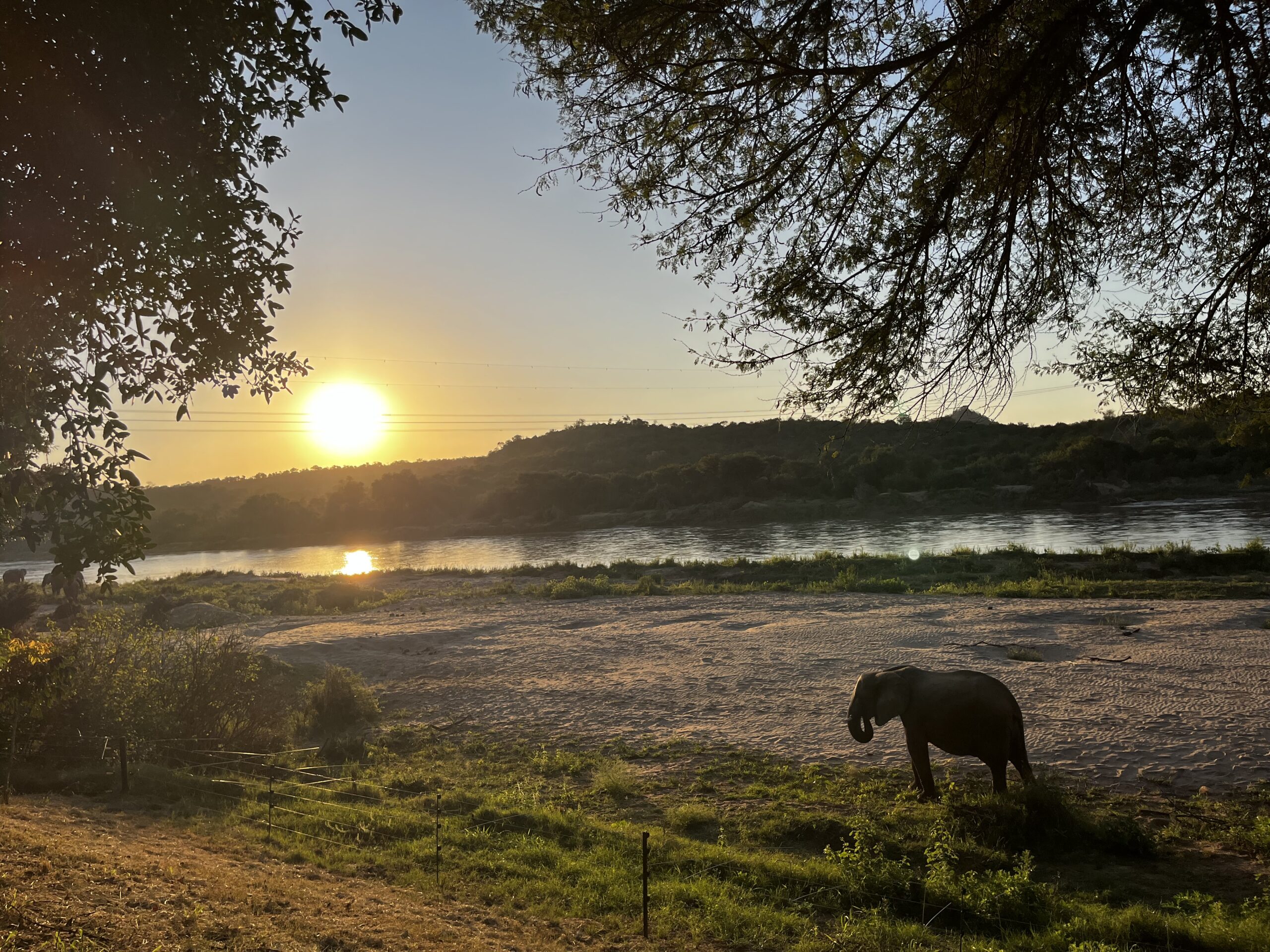
Personally, when I catch myself staring into nothing, whether at the African savanna or the Olifants River, at two birds hopping around in my garden, or at clouds forming in the distance before the thunder, my processing time has completed. And in those moments, I feel presence at a different frequency.
Practices to Notice Nature
I’m highly aware that most of humanity goes through daily life without noticing the natural world around them, wandering through it while listening to Podcasts.
That said, no one is obliged to develop an interest in Nature, in my opinion. However, if you realise what you get from it in return. Perhaps it can also help us combat the larger-scale problems we face on Earth. Only if we turn our attention slightly more to Nature.
The following things are just ideas you can take into your next day wherever you are. For this, you can be in a small park or a strip of Nature in a city.
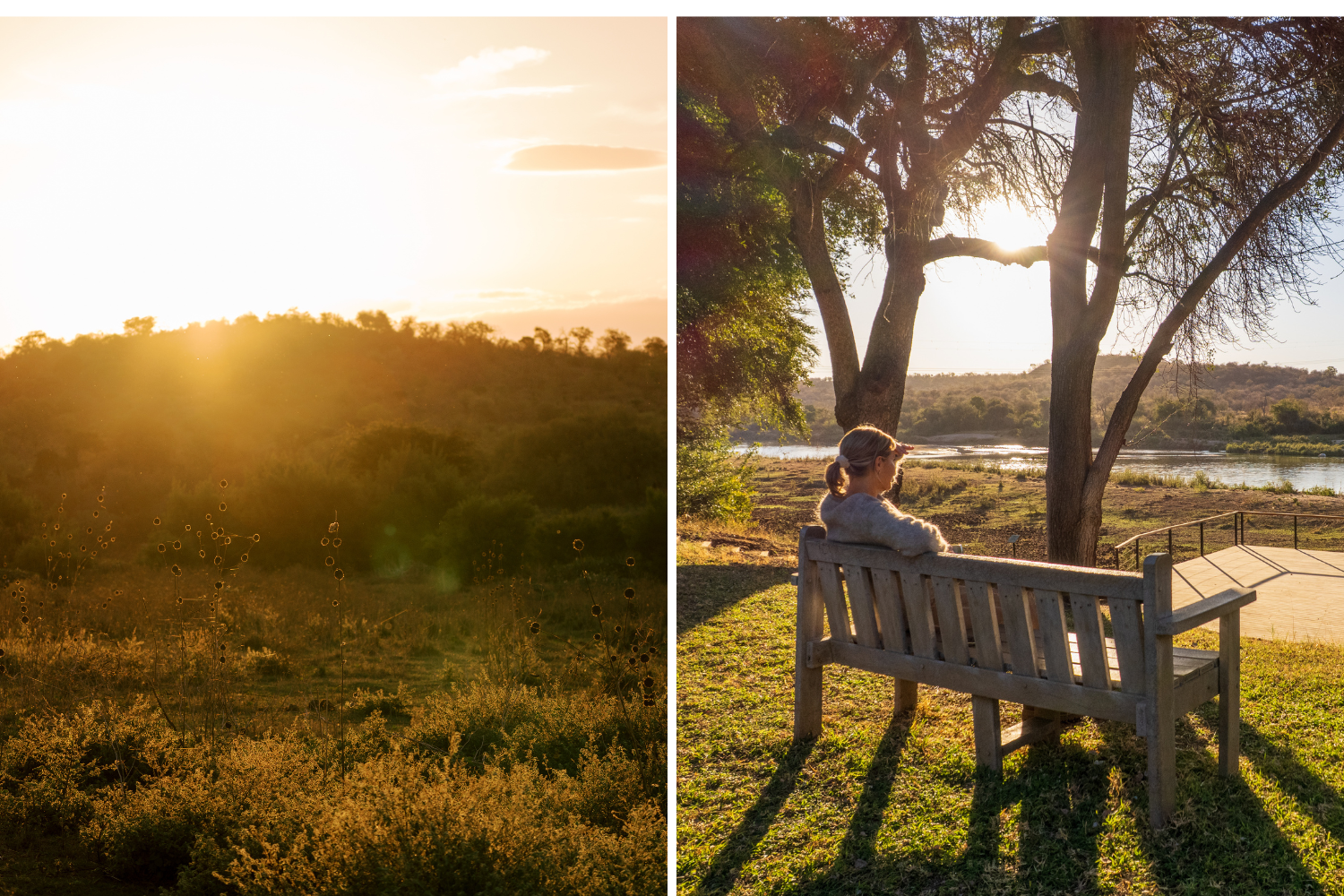
Start with sitting down. We notice so much more when we are still.
Allow process time, allow your mind to run, and allow it to take time to settle. In the meantime, you can start with looking up. You will probably automatically fix your gaze on something. It’s not so often we look up, and you almost find something to look at.
Is it cloudy? What shapes do the clouds make? Is it sunny? How intense is the blue sky? Marine blue or bright?
Do you see tree canopies? Or even a single tree? Perhaps the sun’s rays are reflecting off the leaves or finding their way to the ground. Trees that grow from buildings, I always find that incredibly surprising.
After having looked up, take a deep breath, if it doesn’t already come naturally.
Feel your skin and today’s weather. Is the wind blowing through your hair or chilling your skin? The sun gently touching your skin?
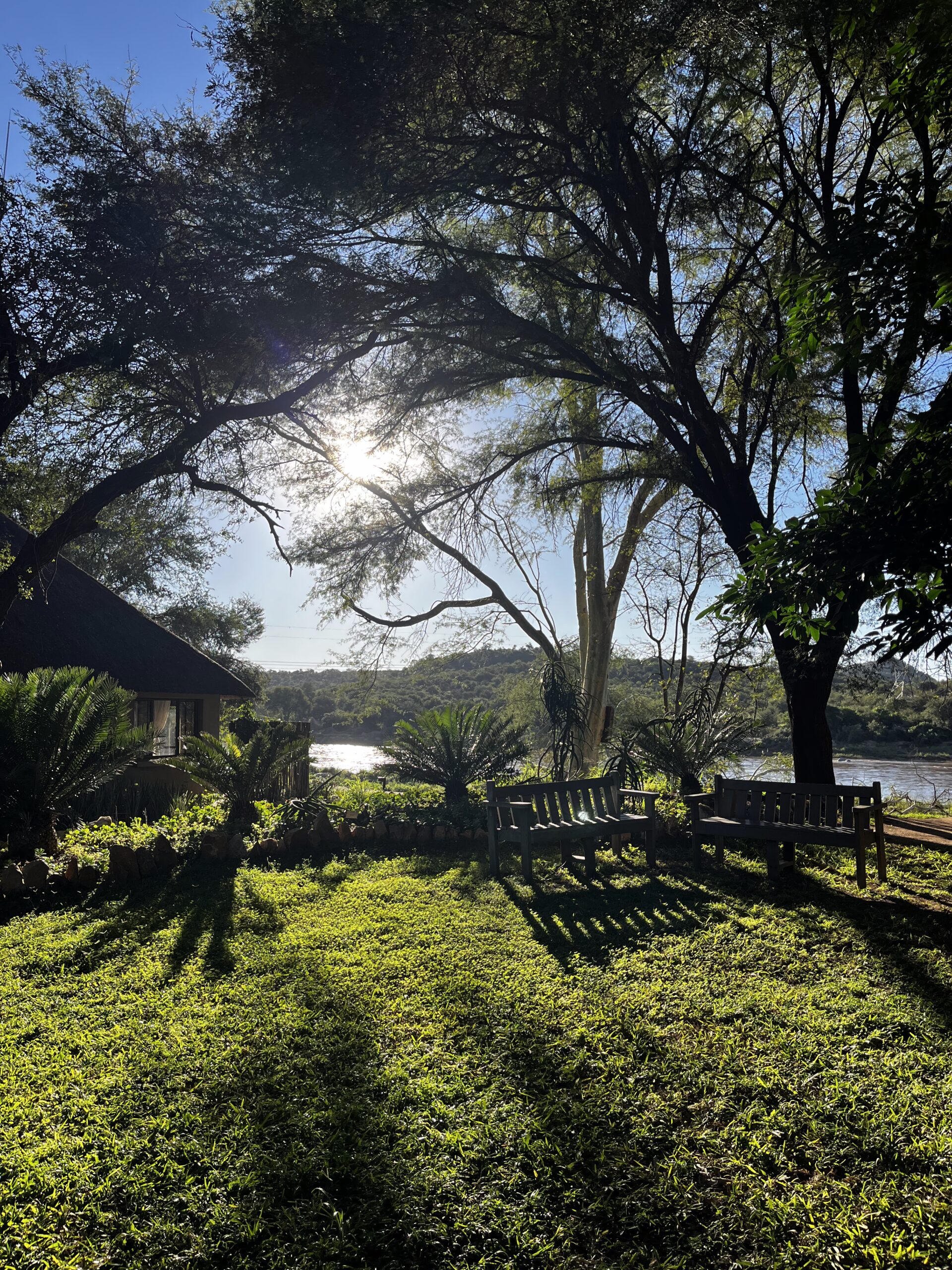
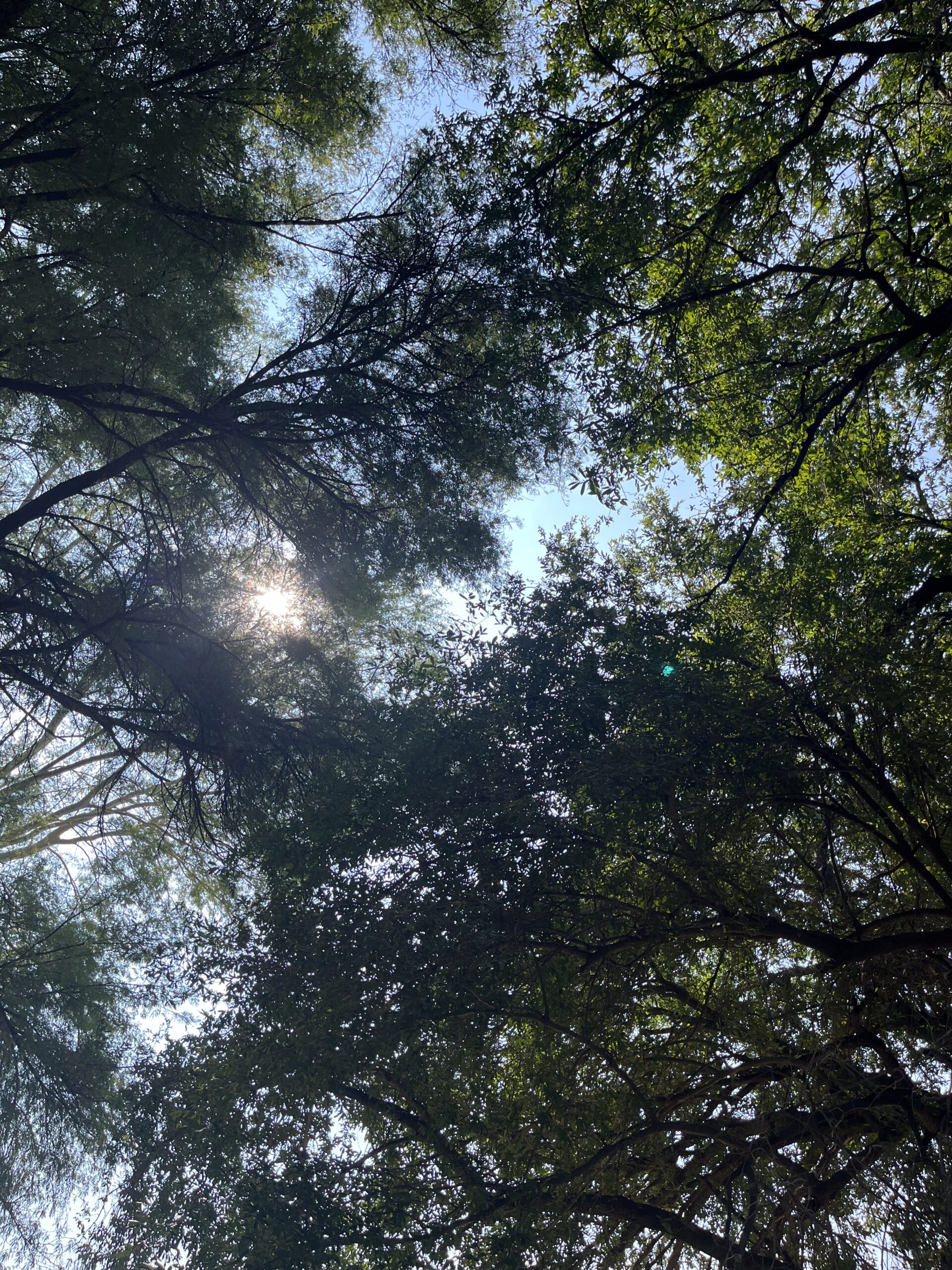
In Nature, all the beautiful colours and patters we can see have a function. Leaves don’t turn red because it’s beautiful. Waterbuck don’t have white circles on their rump because they look fancy. We can use those profundities and sophistications to train our presence and spark our interest in Nature.
If you’re still sitting down, see what patterns you can observe around you.
Sitting behind my desk, I realise my breath slowed down, my appreciation for the four treetops outside my window has grown, and I’m looking forward to immersing myself in Nature.
Whether that is here in the ‘Nature-lacking’ Netherlands or in the surroundings of Sashwa.
Written by: Joosje Heringa
 Enquire
 Chat
 Email